
Residential Roof Cleaning - Clay and Concrete Tiles, Northampton (September 2025 - January 2026)
Between September 2025 and January 2026, we kept our schedule busy with several roof-cleaning jobs across Northampton, on both clay tile and concrete tile properties. If you want to be amazed by the transformation our three-stage approach delivers, take a look at the photos on this page. That’s all manual moss scraping, soft washing, and DDAC biocide treatment.
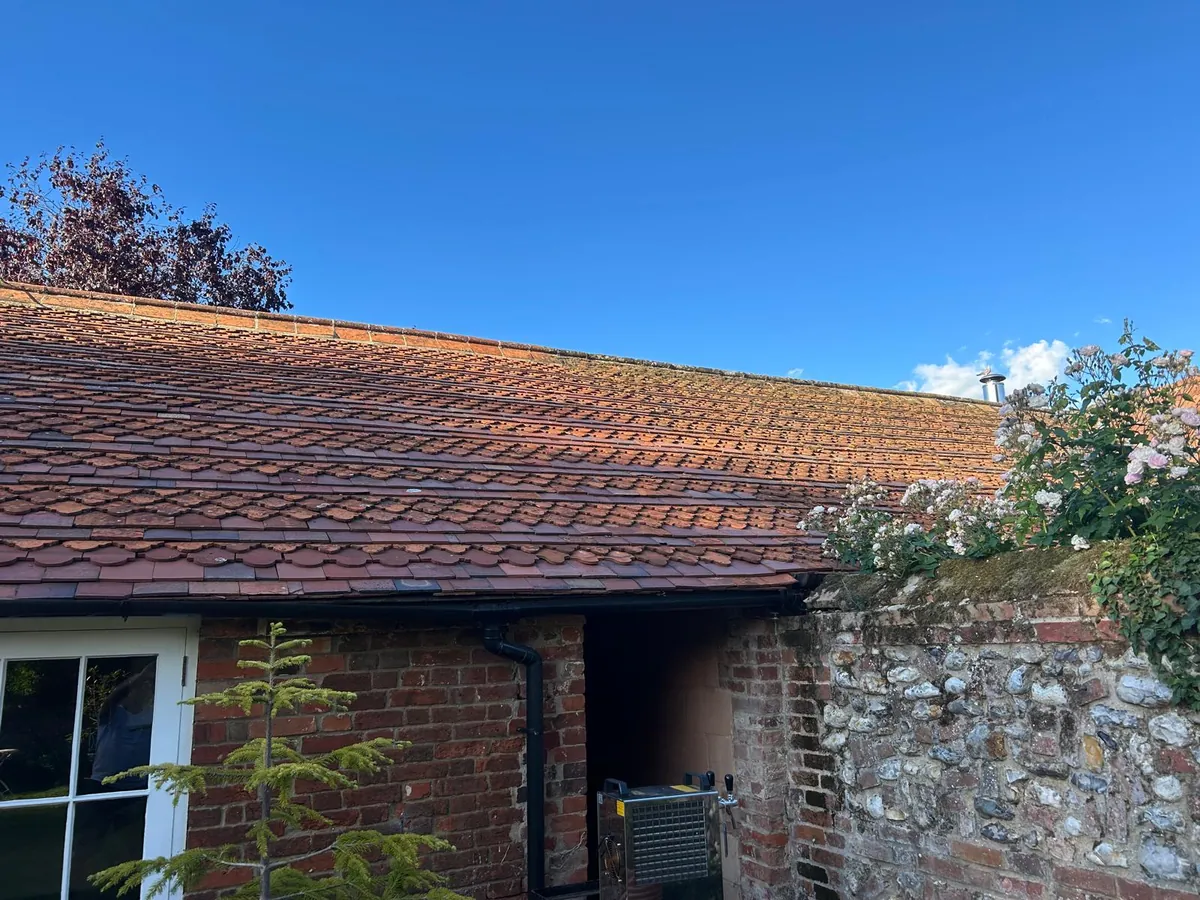
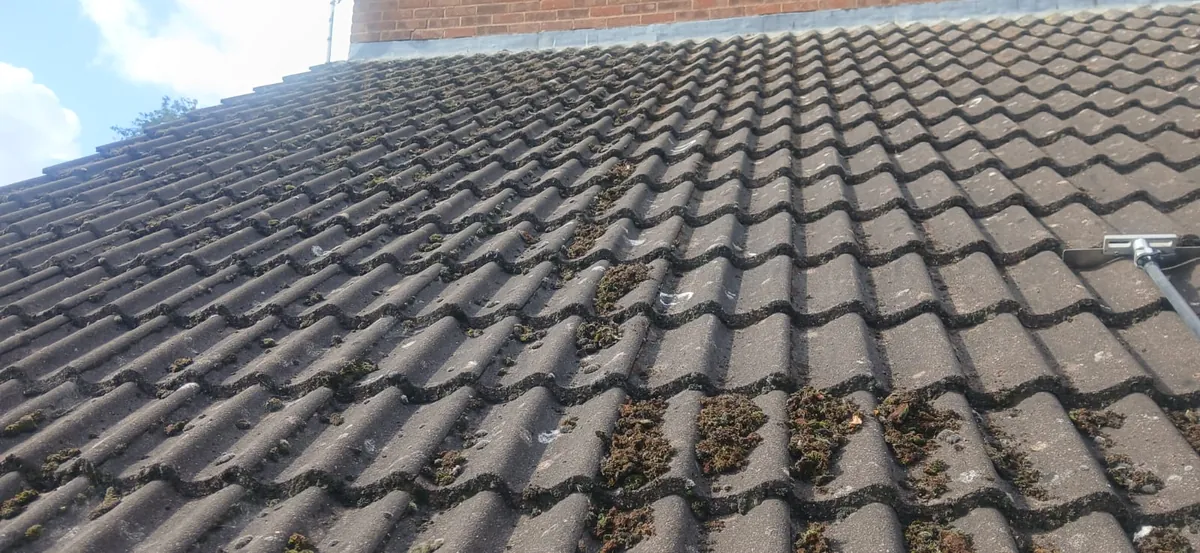
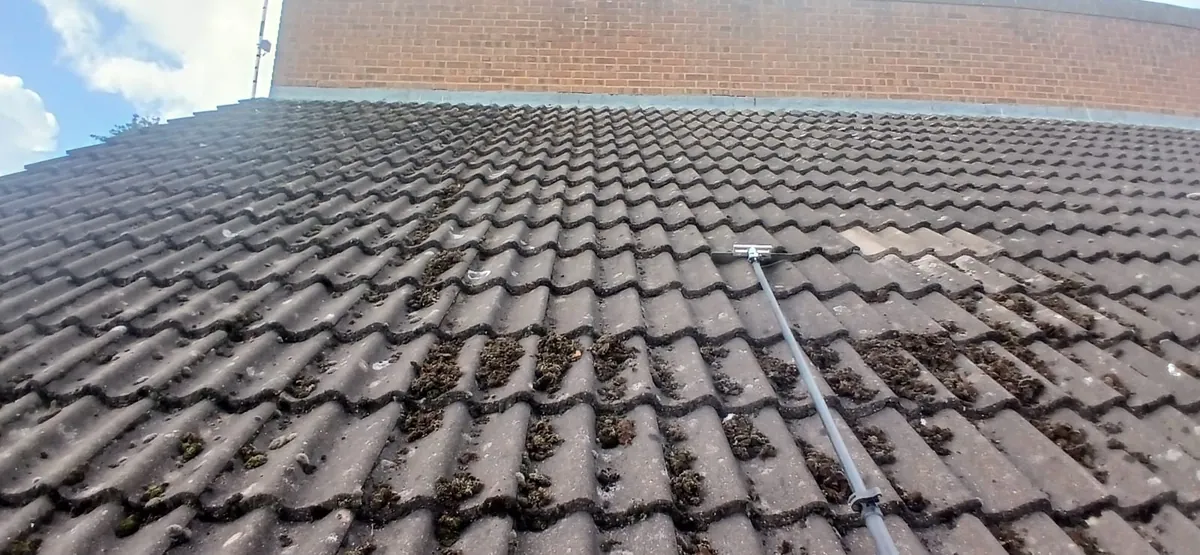
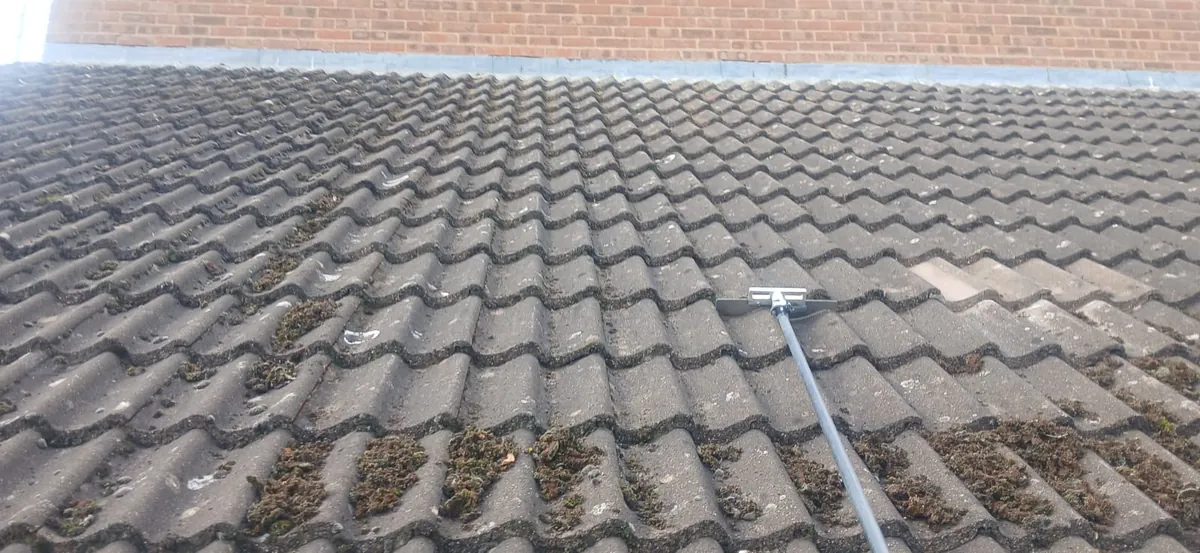
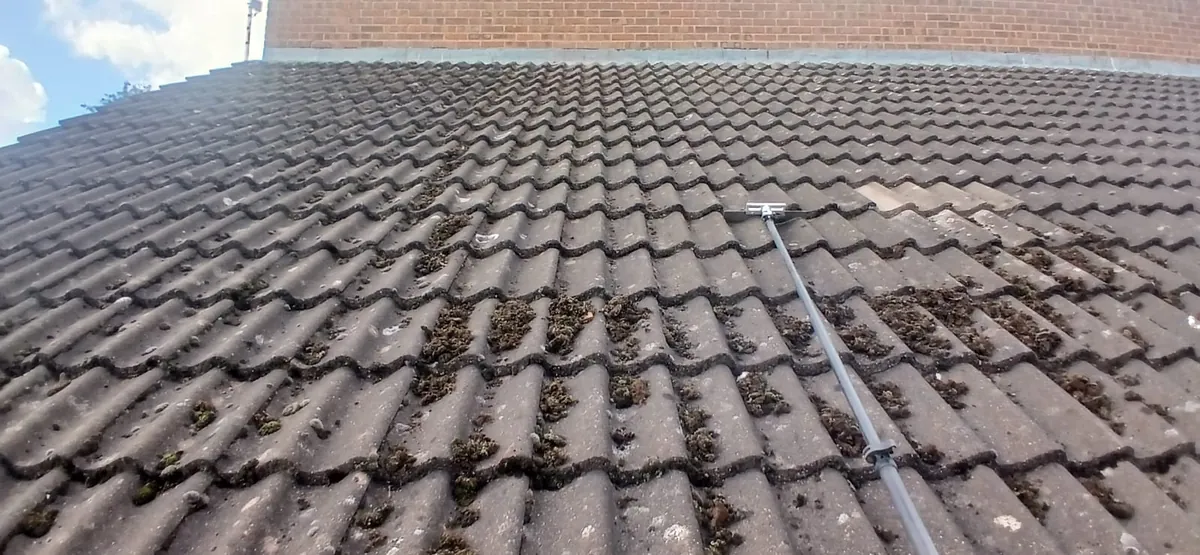
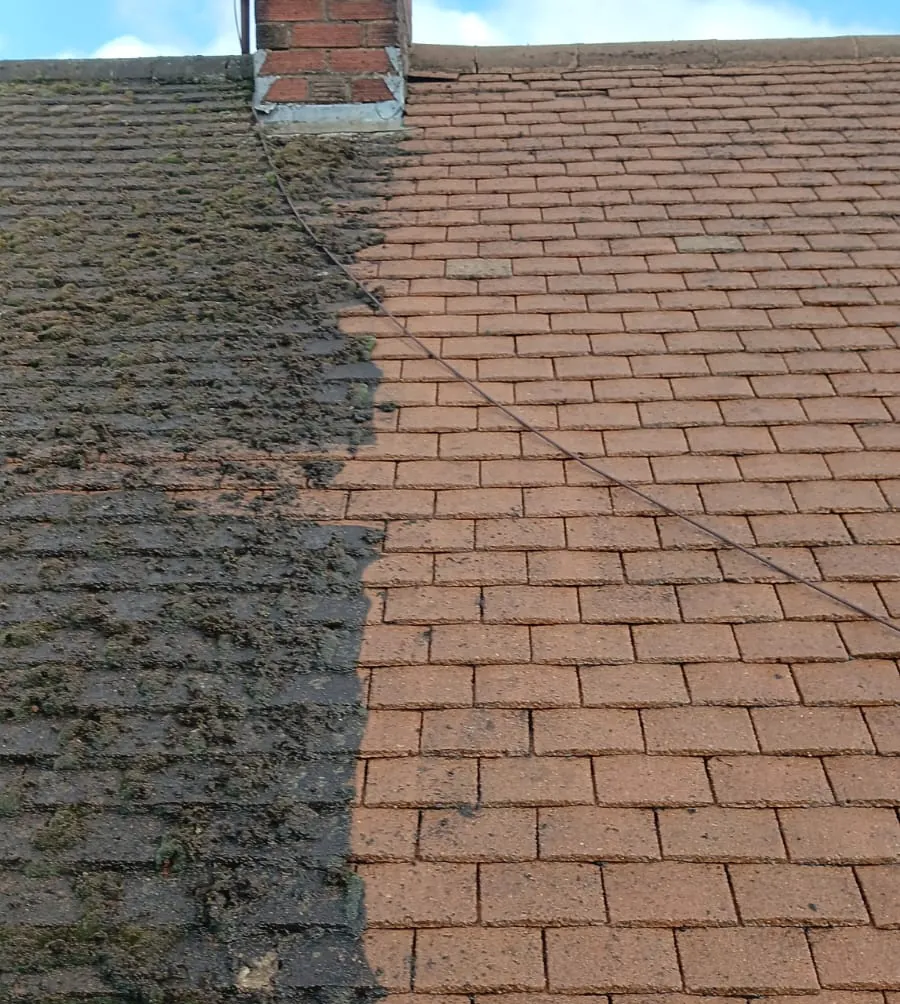
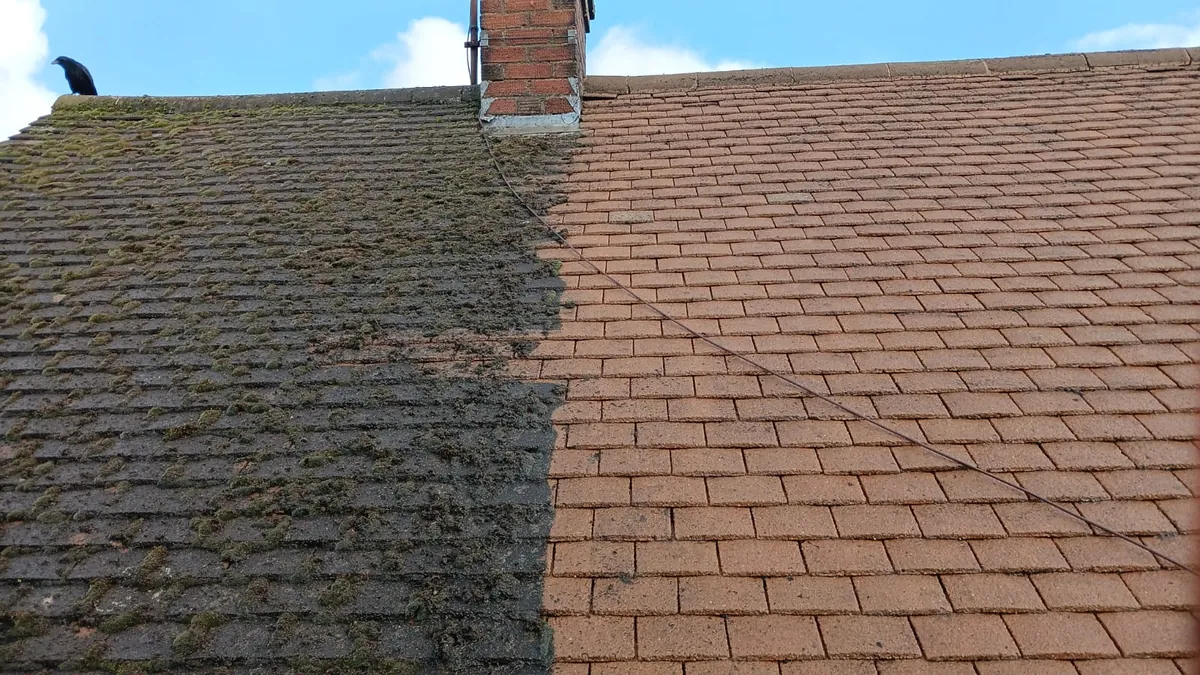
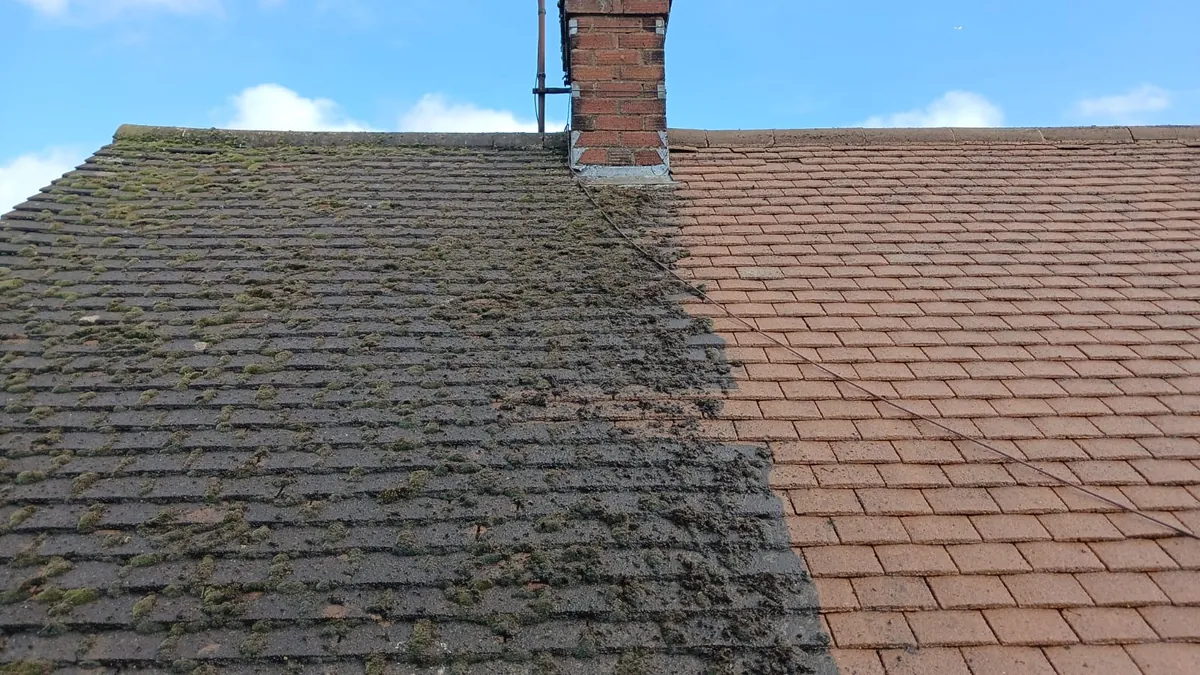
The split-view images show what our clients see when we’re done: one half of the roof with terracotta tiles returned to their original colour, while the other half (untreated) was still covered by heavy moss, lichen and black algae. Everyone uses filters and editing nowadays. Not us. It’s simply the difference between cleaning and neglect.
The project, briefly put
- Where: Northampton, Northamptonshire (various residential properties)
- Date: September 2025 - January 2026
- The types of roof: Clay interlocking tiles, concrete interlocking tiles
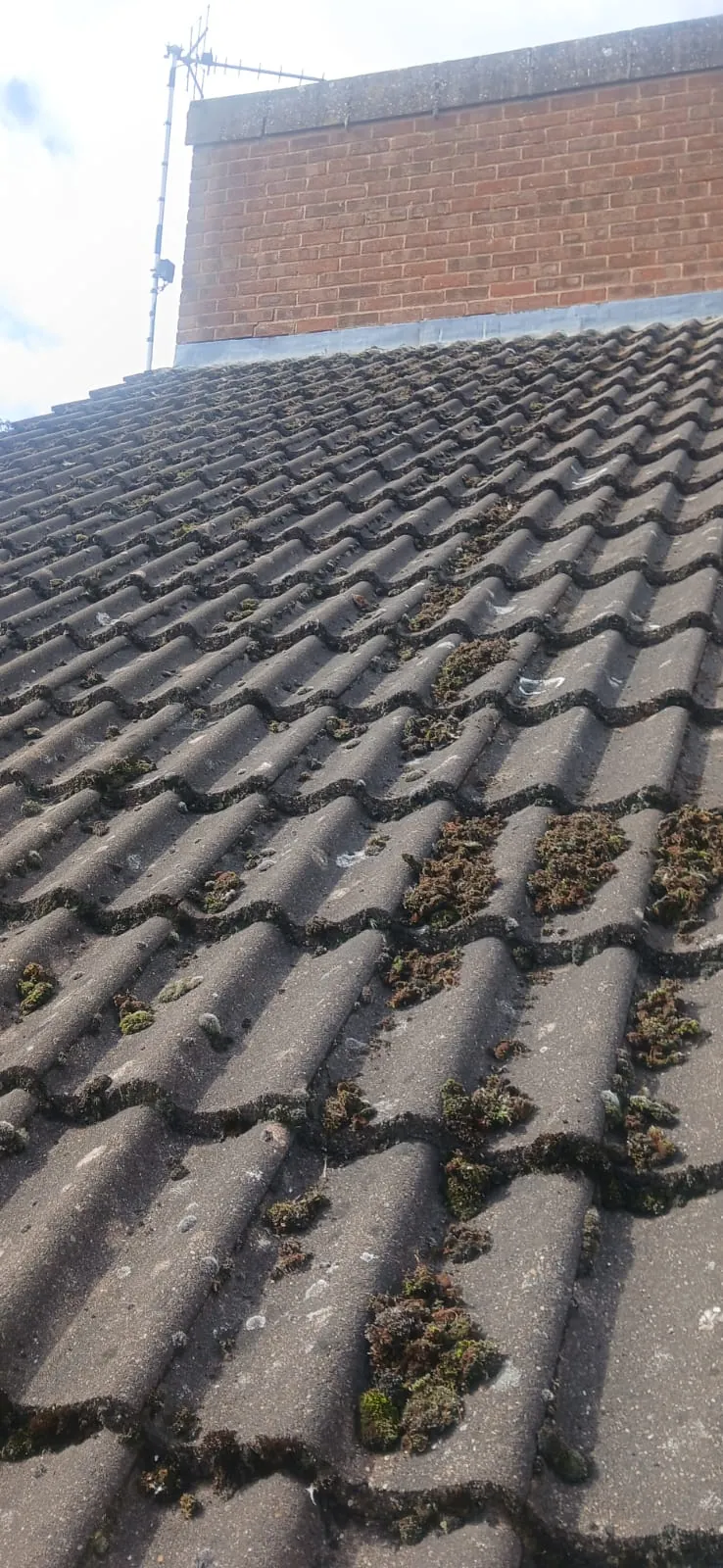
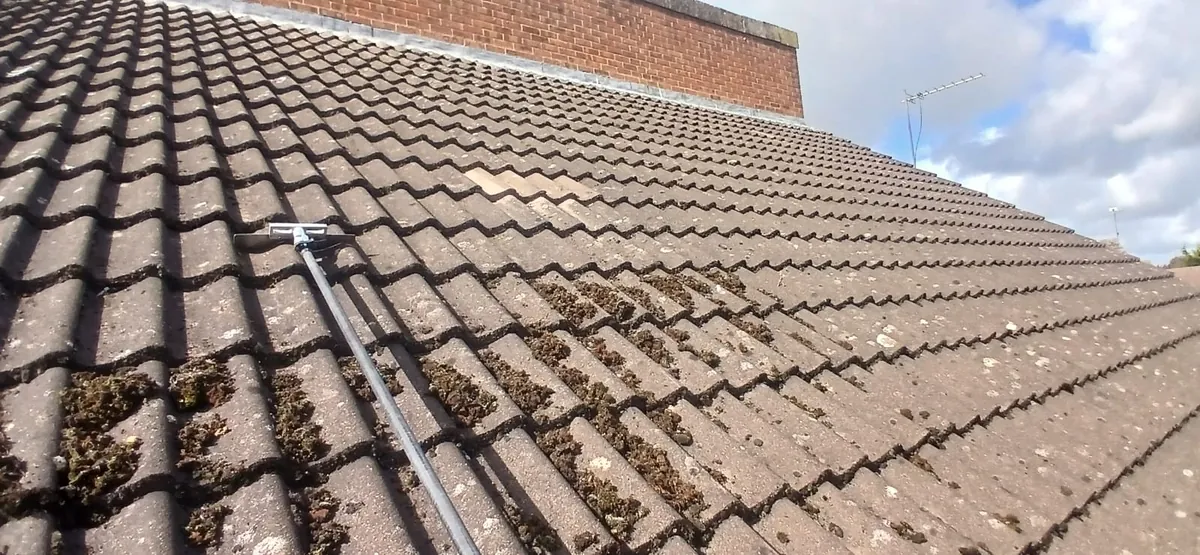
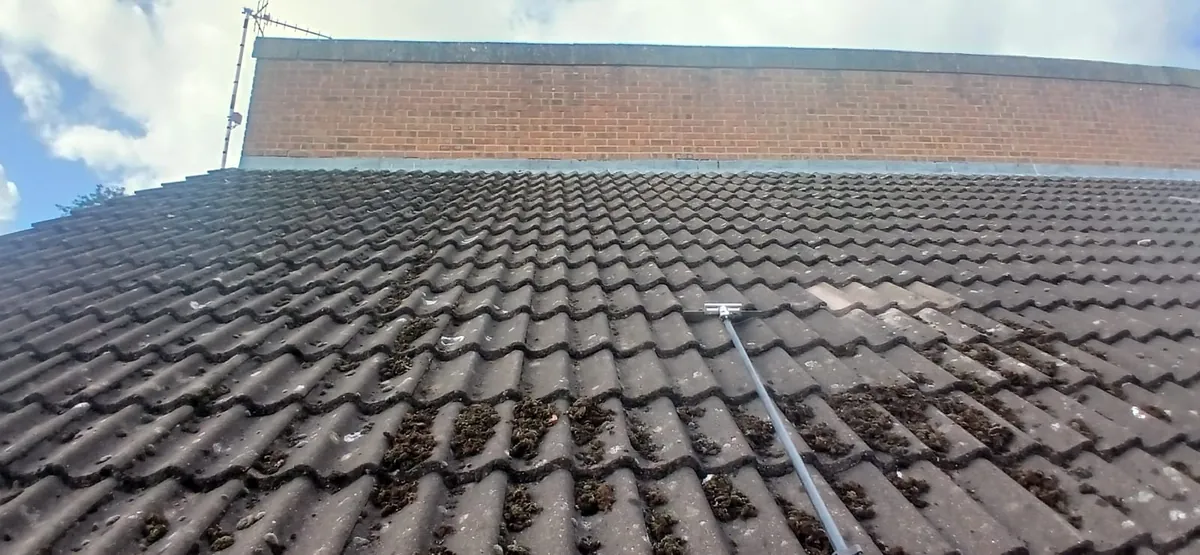
- Common contamination we dealt with: Heavy moss growth between tile ridges, lichen colonies, black algae staining, and organic debris in valleys
- How did we address it: Manual moss scraping, soft washing, DDAC anti-algae biocide treatment
- Access: Roof ladders and scaffold towers, depending on pitch and reach
- How long did it take us: 1 to 2 days per property
The Challenge we’ve tackled
The county’s wet climate, tree cover, and rather low-pitch modern housing stock explain why moss accumulates quickly on Northamptonshire roofs. Concrete interlocking tiles retain moisture in the textured surface, and within 5 to 10 years the ridges between tiles turn into perfect moss beds. Even though clay tiles are more resistant, they’re not invulnerable to lichen colonies - the situation can get pretty bad on north-facing slopes.
While aesthetics are the first thing you notice, the problem goes far beyond the surface. Heavy moss holds water against the tile surface, aggravating freeze-thaw damage to concrete tiles and clogging gutter lines. It also creates the perfect environment for lichen roots to penetrate weathered surfaces. Leave it all like that, and a 20-year-old roof will need replacing a decade earlier than one that had been cleaned and maintained by the book.
Our strategy
There’s not much creativity to roof cleaning. Following the same three stages is, in fact, what makes it successful. We stick to these stages religiously, because skipping any of them turns into a disaster. We never have so far.
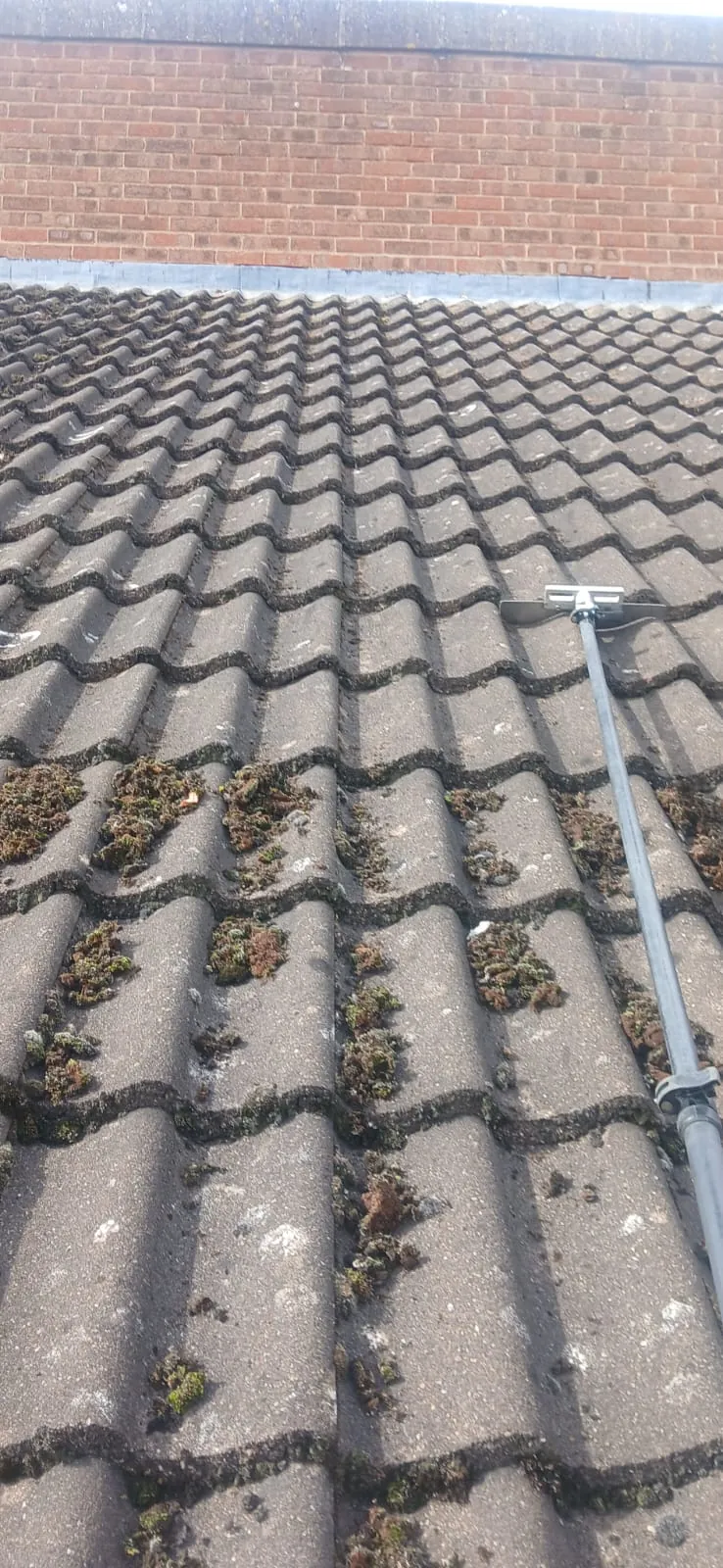
The first stage requires some elbow grease, for sure. Using hand tools and working from the bottom up, we physically scraped the heavy moss off the tile surface so the debris fell onto the already-cleaned area below. We didn’t need high pressure - it would have cracked the tiles, dislodged them, or pushed water under the lap. We removed the bulk of the organic growth by hand.
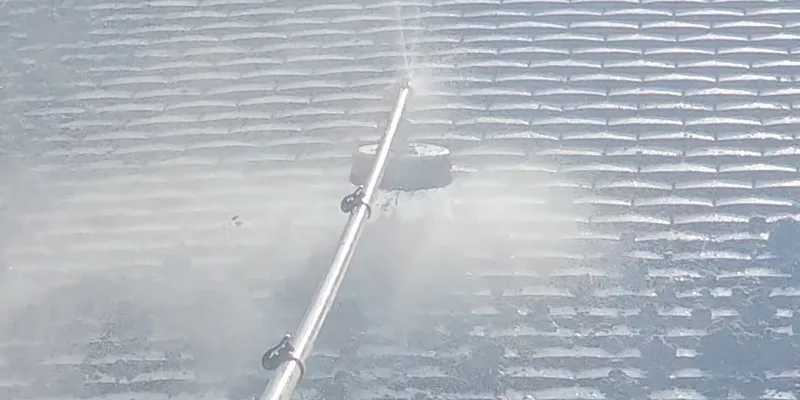
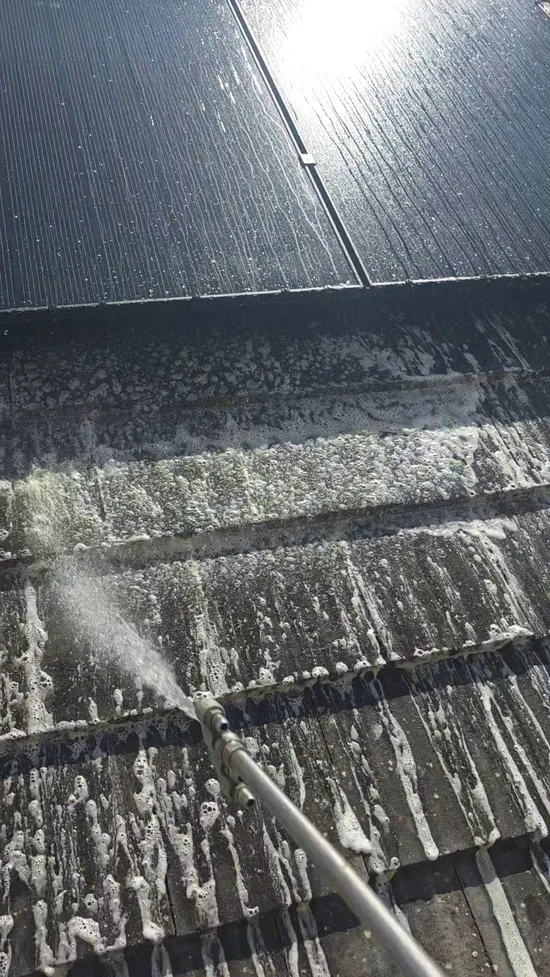
With the moss cleared out of the way, we treated the roof with a low-pressure cleaning solution. It broke down any remaining algae, lichen patches, and biofilm at the root level. On concrete and clay tiles, soft washing is key - it let us clean without damaging the tile surface, mortar bedding, or flashings.
In the final stage, we applied the DDAC (Didecyldimethylammonium chloride) anti-algae biocide all over the roof surface. As it penetrates deep into the tile pores, DDAC prevents organic regrowth for 4 to 5 years. While it seems incredible to the inexperienced, the treatment actually activates with rainfall and continues to work over the following months.
If we can’t apply the biocide because of the weather, we’ll return later - for free. DDAC activates when it rains, but it does need dry tiles for application.
Need Your Roof Cleaned?
Send a few photos of your roof on WhatsApp and we will advise whether it needs a full clean, spot treatment, or simply a biocide top-up. Call 07307 358765 or request a quote online.
Get a Free QuoteCheck out the results
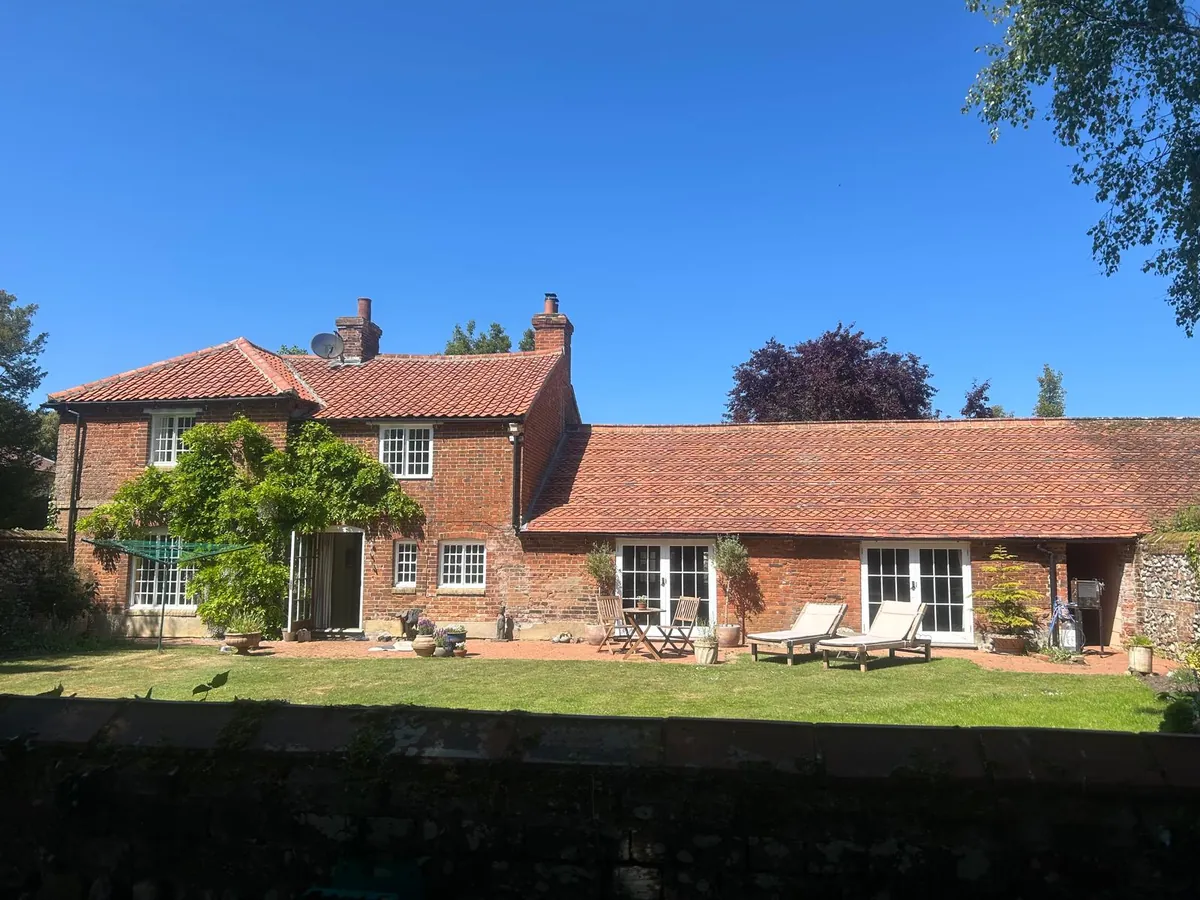
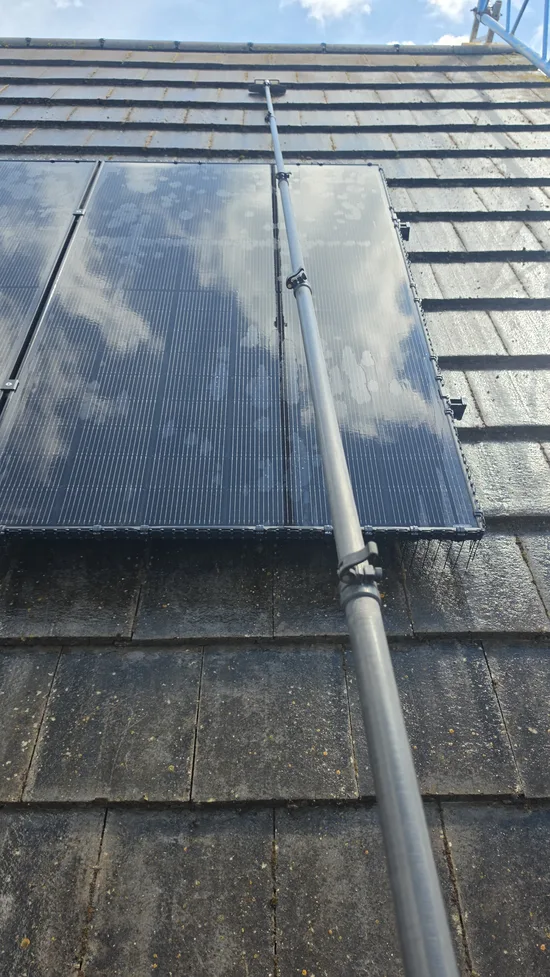
The easiest way to understand the difference is to look at the split-view photos in the gallery. When we arrived, black algae and lichen were covering the concrete tiles. To the client’s surprise, we cleaned and restored them to their factory terracotta colour. The clay tiles came back to a warm orange after our cleaning. Another impressive part: within minutes of the first stage, you could already see the difference from the street. And as the biocide continued to penetrate deeper and inhibit regrowth, the effect kept improving over the next 2 to 3 months.
Weeks after we leave, clients tell us their roof keeps looking better. It’s not a second clean - it’s the biocide working its wonders. Within a week, expect the neighbours to ask who cleaned your roof.
Why do we go with this approach?
Two things make the difference between a long-lasting clean roof and a temporary one. Remember the elbow grease? That’s the first: our manual scraping removes the bulk of the growth. We don’t need high-pressure jets that would only damage the tiles - no one can prepare you for the damage pressure washing does to a 20-year-old concrete tile roof. Second, the DDAC biocide treatment matters more than the visible clean. If we don’t apply the biocide, you’ll see us back in 12 to 18 months - that’s how quickly moss and algae regrow without it. Apply the biocide, and we won’t be back for 4 to 5 years.
While we’re on the roof, we also take a good look at it. Cracked ridges, broken tiles, blocked gutters, lifted flashings - any other issue we spot goes into the written report. Yes, you’ll get one after we’re done.
Related Services
- Roof Cleaning and Moss Removal - full service details, pricing from £600
- Gutter and Fascia Cleaning - often combined with roof cleaning in the same visit
- Residential Exterior Cleaning in Northampton - all services for homeowners
Project Images
Get Your Free Quote
Fill in the form below and we'll get back to you within 24 hours.