
Residential Render, Brick and Patio Cleaning - Northampton (February 2026)
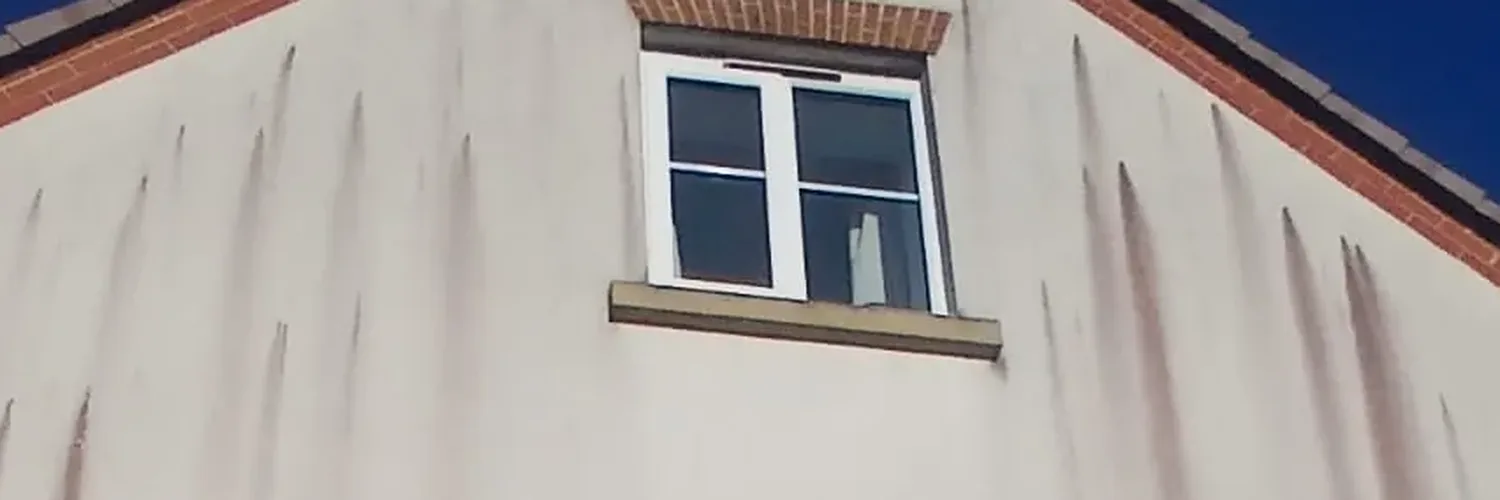
Our cleaning portfolio for February 2026 includes several residential exterior cleaning jobs across Northampton. We had to clean three different surfaces: painted render with dark vertical streaking, a Victorian red brick front garden wall, and Indian sandstone patio flags. Even though we knew we’d need a different technique on each surface, the underlying problem stayed the same - the usual organic growth. Essentially, we had to break it down at the root level, run a thorough, even rinse, and prevent regrowth with a biocide.
These jobs weren’t very different from what we typically do across Northamptonshire. We’re used to homeowners booking us for one job and asking about another while we’re on site. Within minutes, a render clean becomes a render plus patio, and a roof clean suddenly includes a brick wall restoration. Most of the time, we try not to spread individual services across multiple visits - instead, we look for a way to sync everything into a single visit.
The project at a glance
- Location: Northampton, Northamptonshire (various residential properties)
- Date: February 2026
- Surfaces we’ve cleaned: Painted render (three-storey gable ends and full facades), Victorian red brick boundary walls, and Indian sandstone paving
- Main issues: Dark vertical streaking on the render, heavy algae/organic staining on the brick, and green algae and biofilm on the natural stone patios
- Methods used: Sodium hypochlorite soft washing, low-to-medium pressure washing with rotary surface cleaners, DDAC biocide treatment
What we have completed
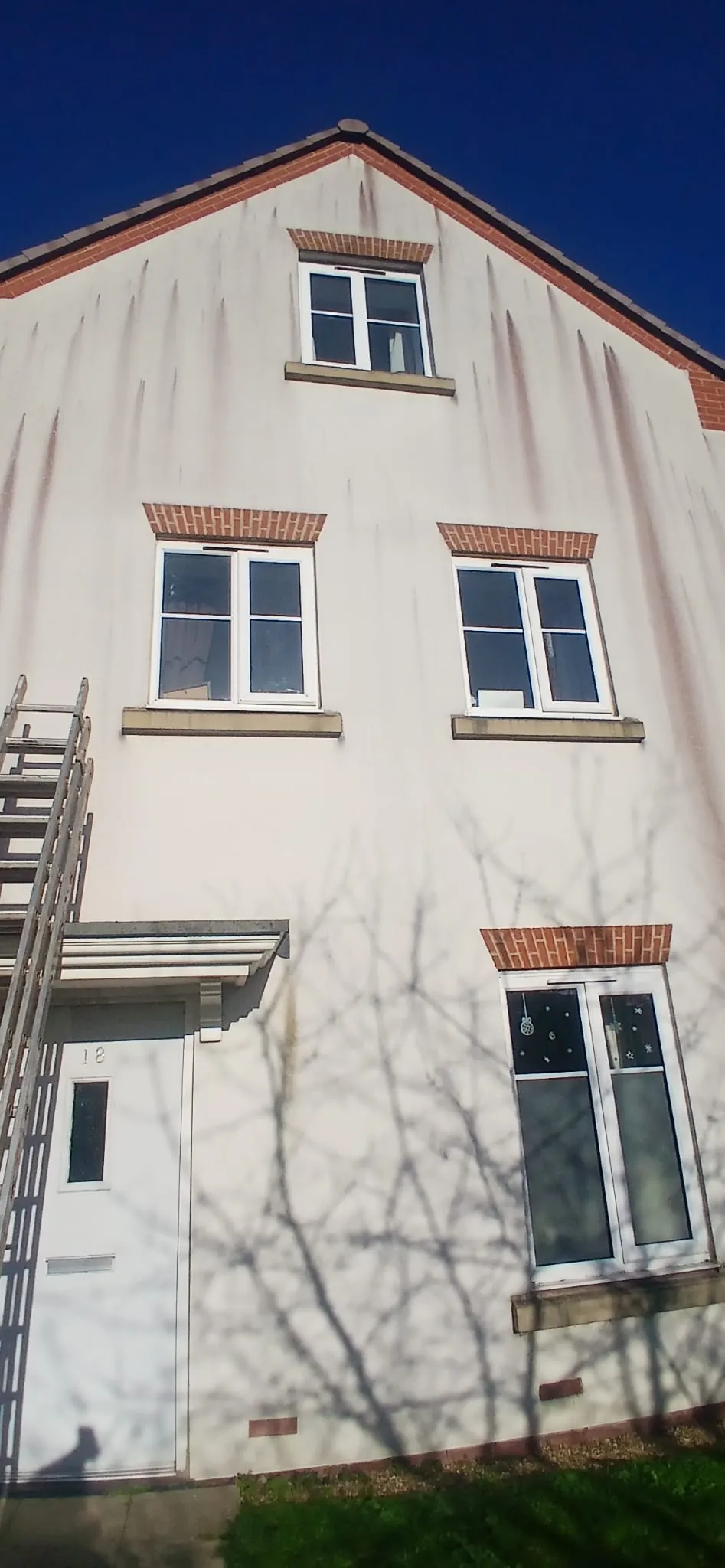
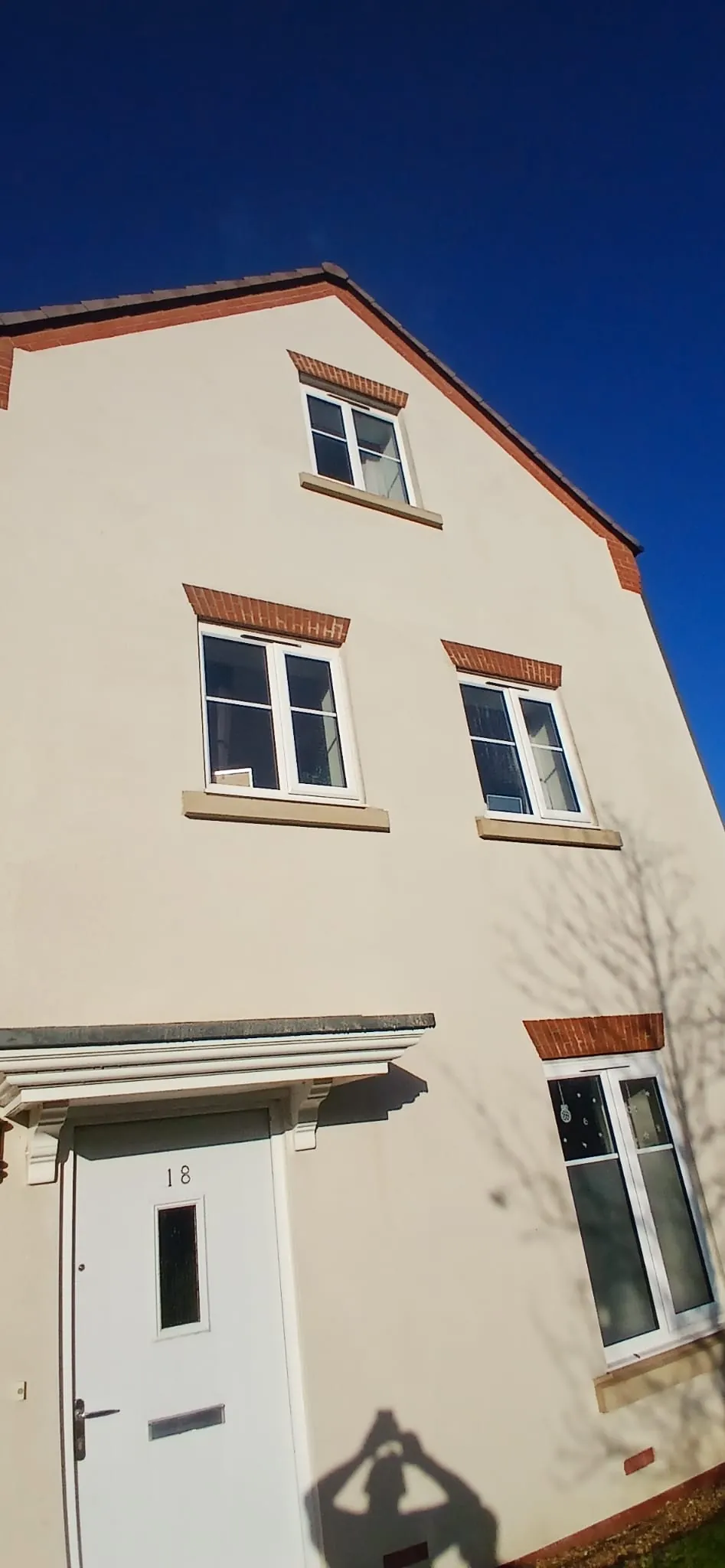
Render Cleaning - we removed streaking from the painted render
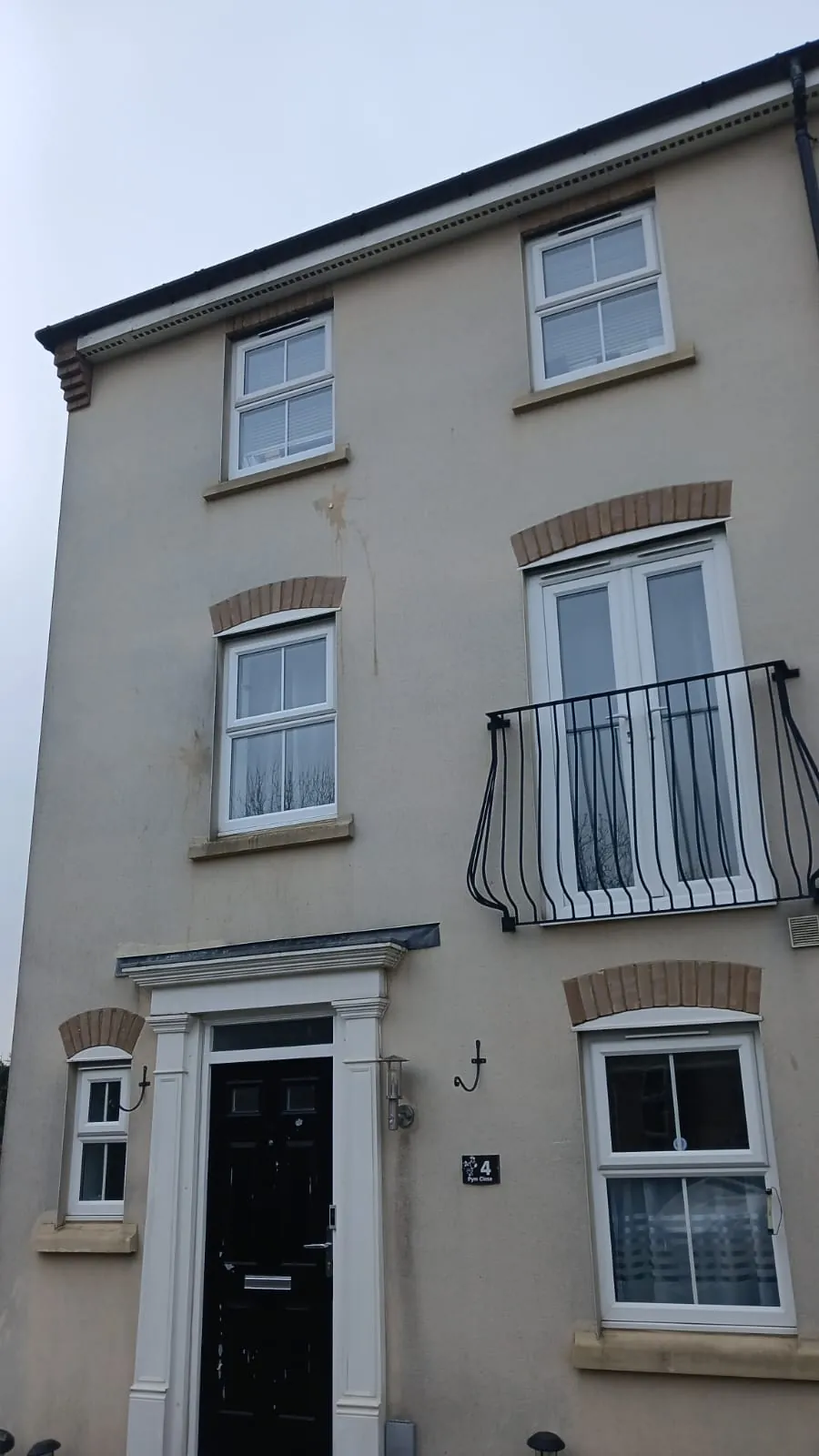
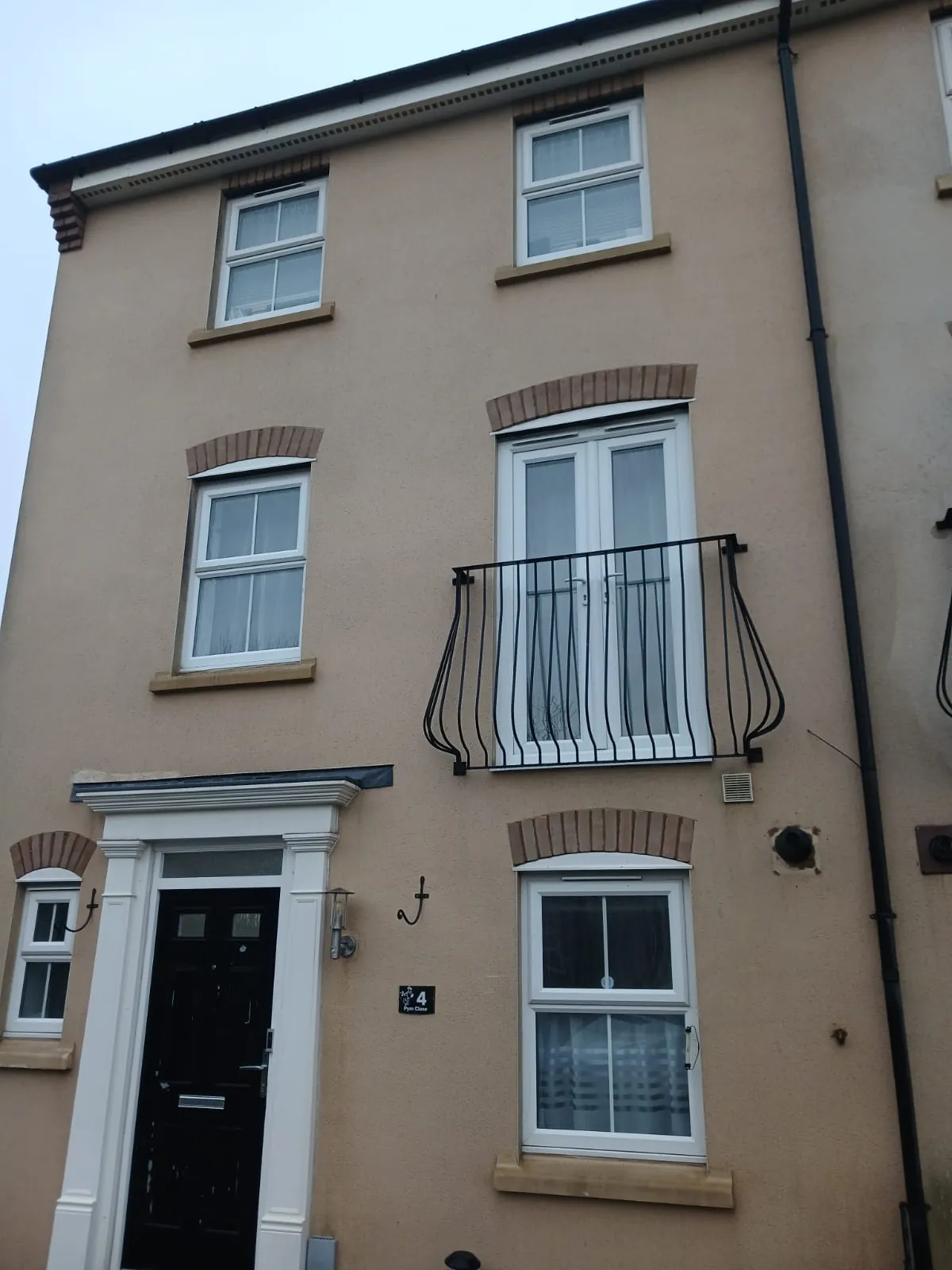
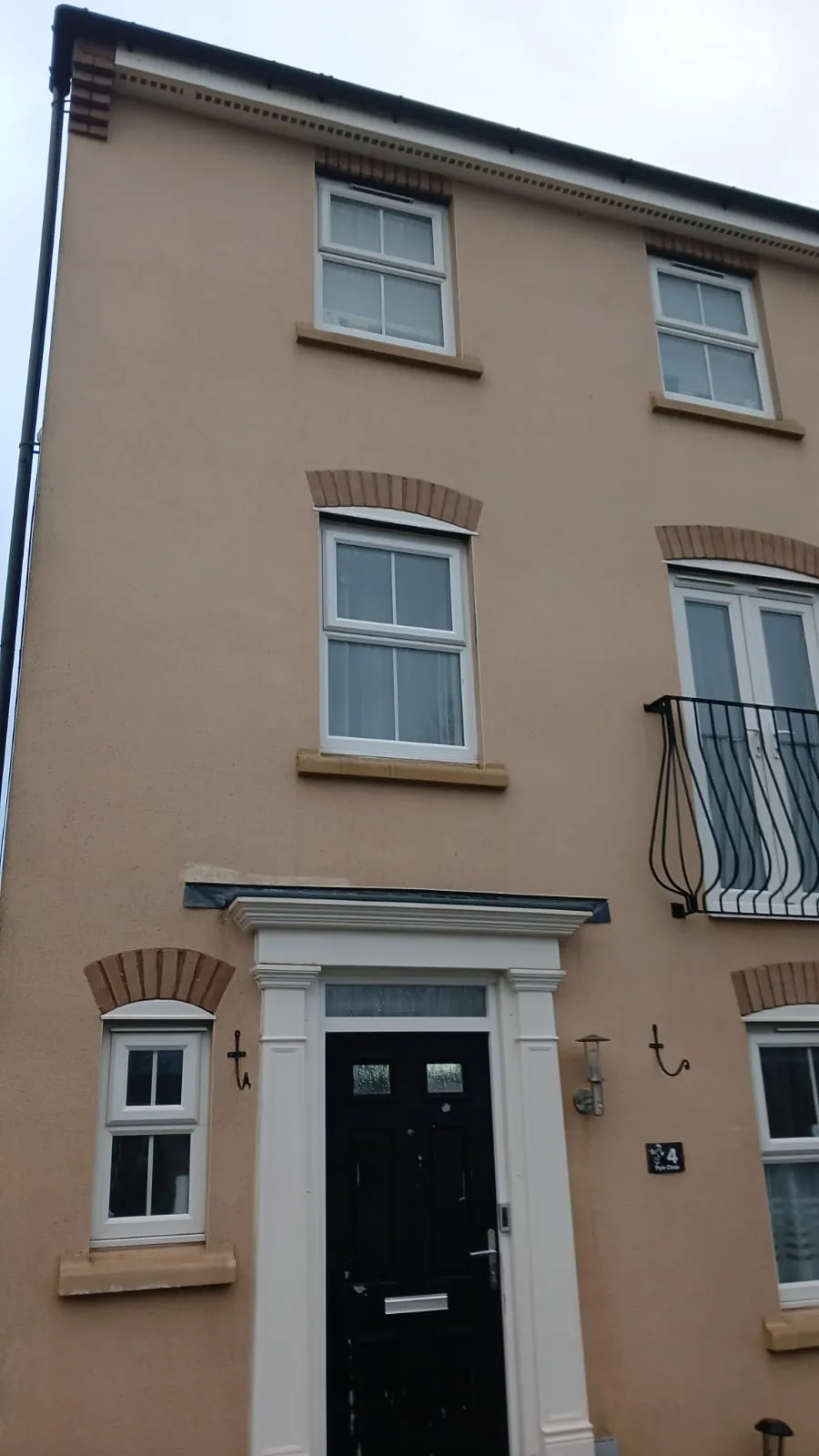
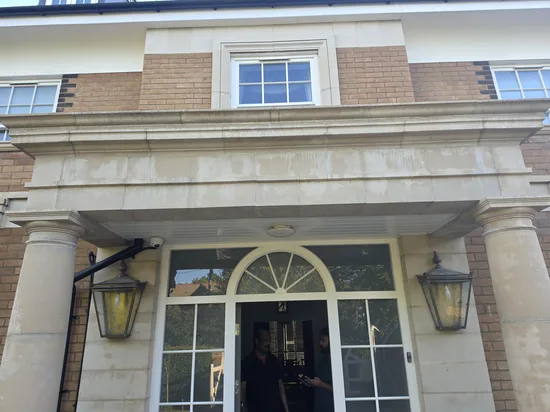
The render projects involved three-storey rendered townhouses. At the gable ends and facades, vertical dark streaks had developed. The main culprit was a mix of algae colonisation, atmospheric soiling, and water runoff staining from parapet lines and window sills.
The cleaning started with a controlled sodium hypochlorite cleaning solution applied to the rendered surfaces. Dwell time to break down the organic component of the stain is always part of the process. We didn’t want any water to seep in behind the render layer, so we rinsed gently at low pressure. Once the walls were clean and dry, we applied a DDAC biocide treatment - for 4 to 5 years, this should stop the algae from regrowing.
We got a clean, uniform cream finish across the entire façade. See the difference for yourself in the before/after pictures in the gallery. One day. In just one day, we managed to get rid of years of streaking.
Restoring a Victorian Brick Wall
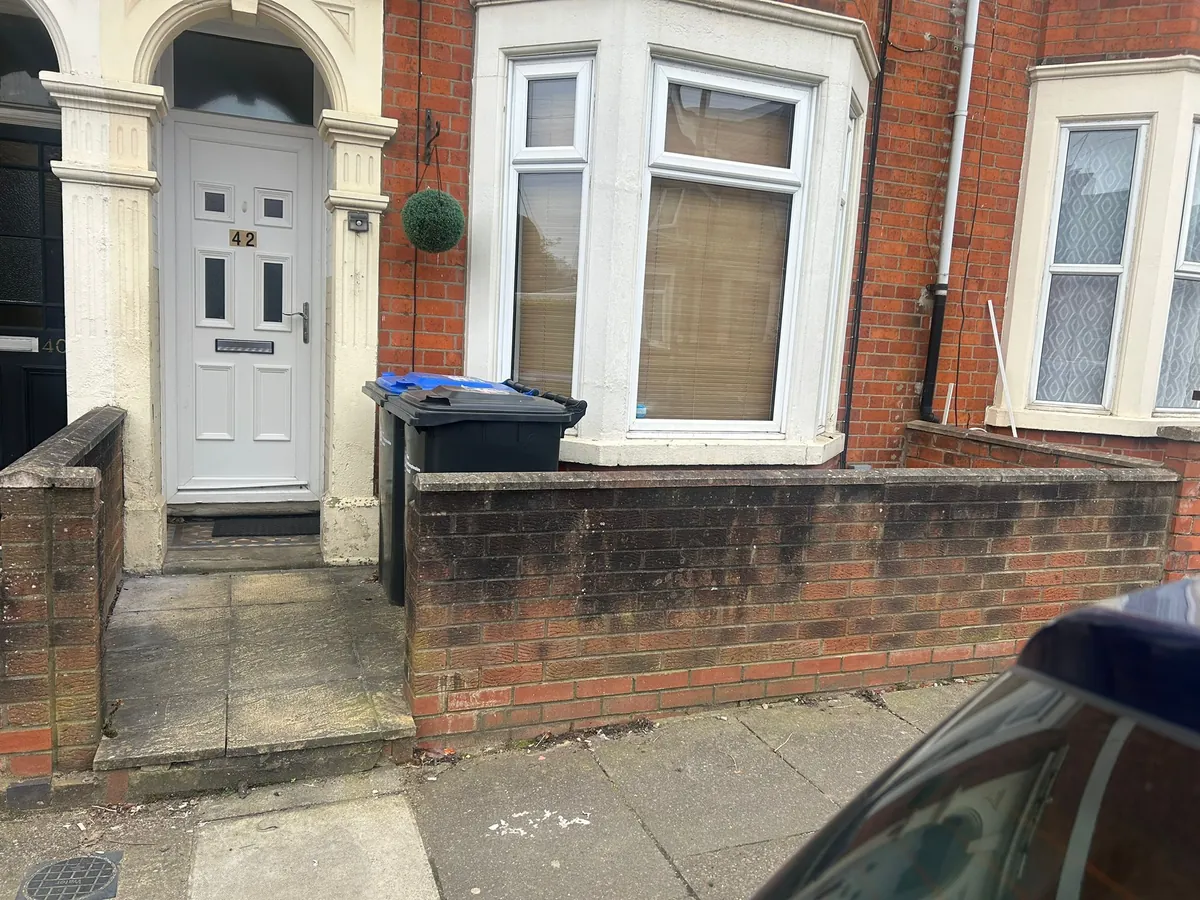
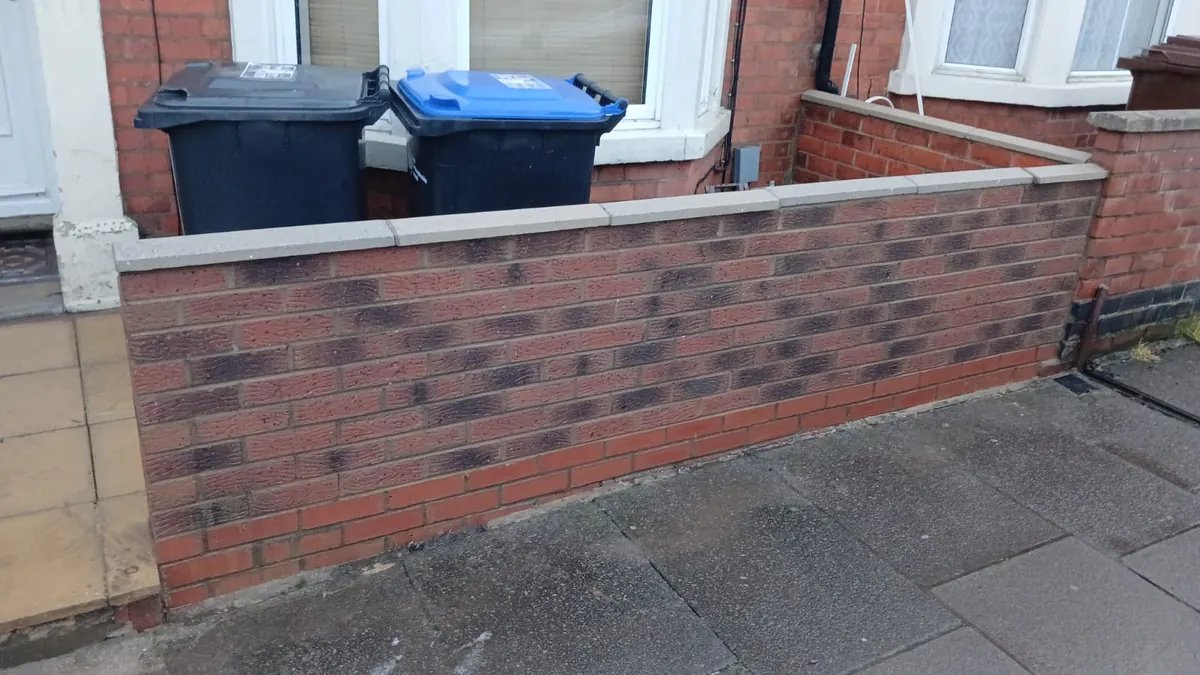
Our brick wall job was a front-garden boundary wall on a Victorian terraced house. The red brick was looking dark and neglected - years of black algae and organic staining do that. Since the mortar was in good condition, we were able to use medium-pressure washing safely.
Eroding the mortar joints wasn’t on our list, so we lifted the organic staining from the porous red brick surface with a rotary surface cleaner at controlled pressure. Once the bulk of the staining was gone, we continued with the DDAC biocide treatment - we don’t want the algae coming back any time soon. Side note: this is an excellent, safe approach on modern mortar. We wouldn’t use it on heritage lime mortar, though. On listed buildings we only use soft wash.
Sandstone Patio Cleaning
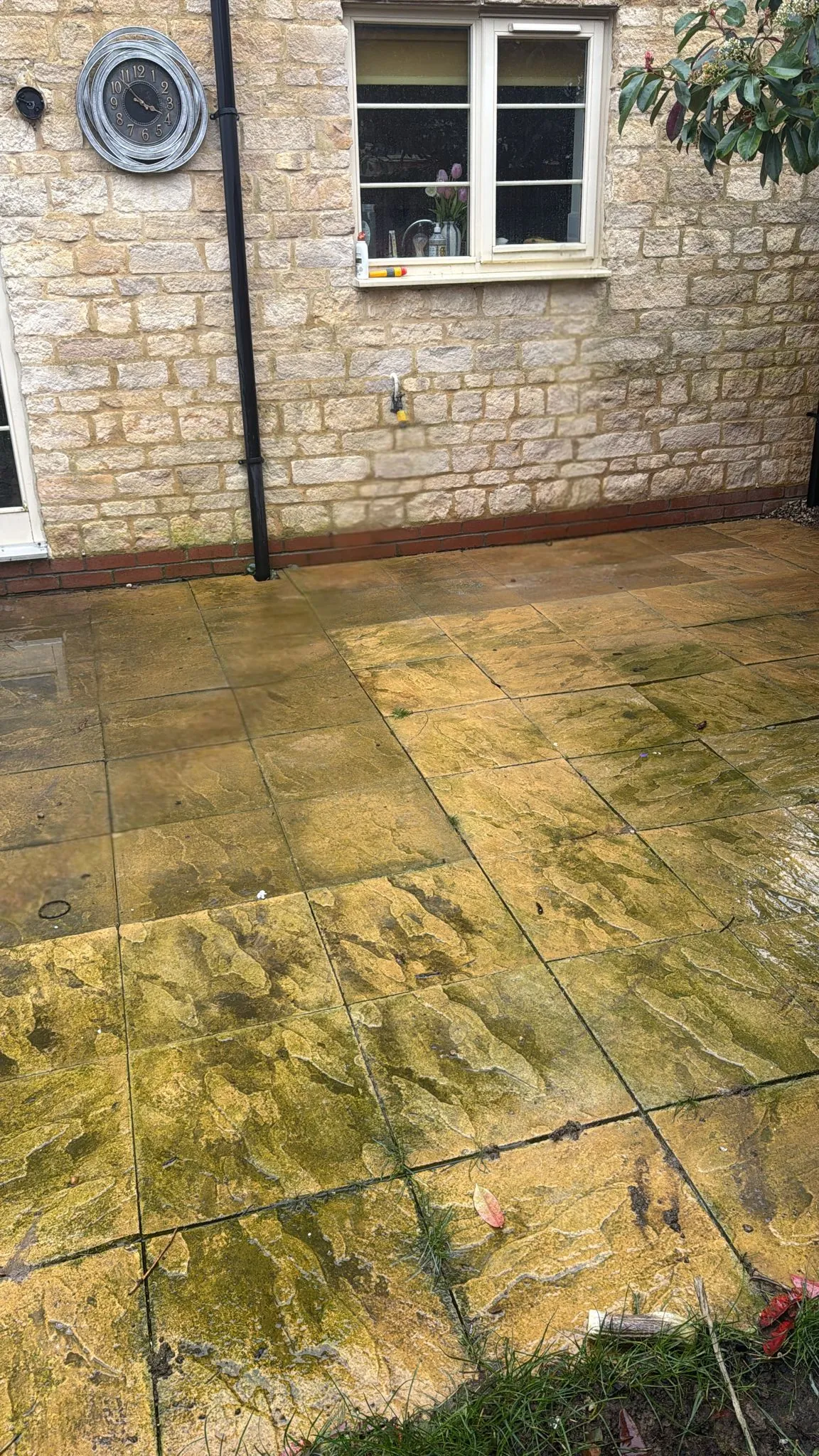
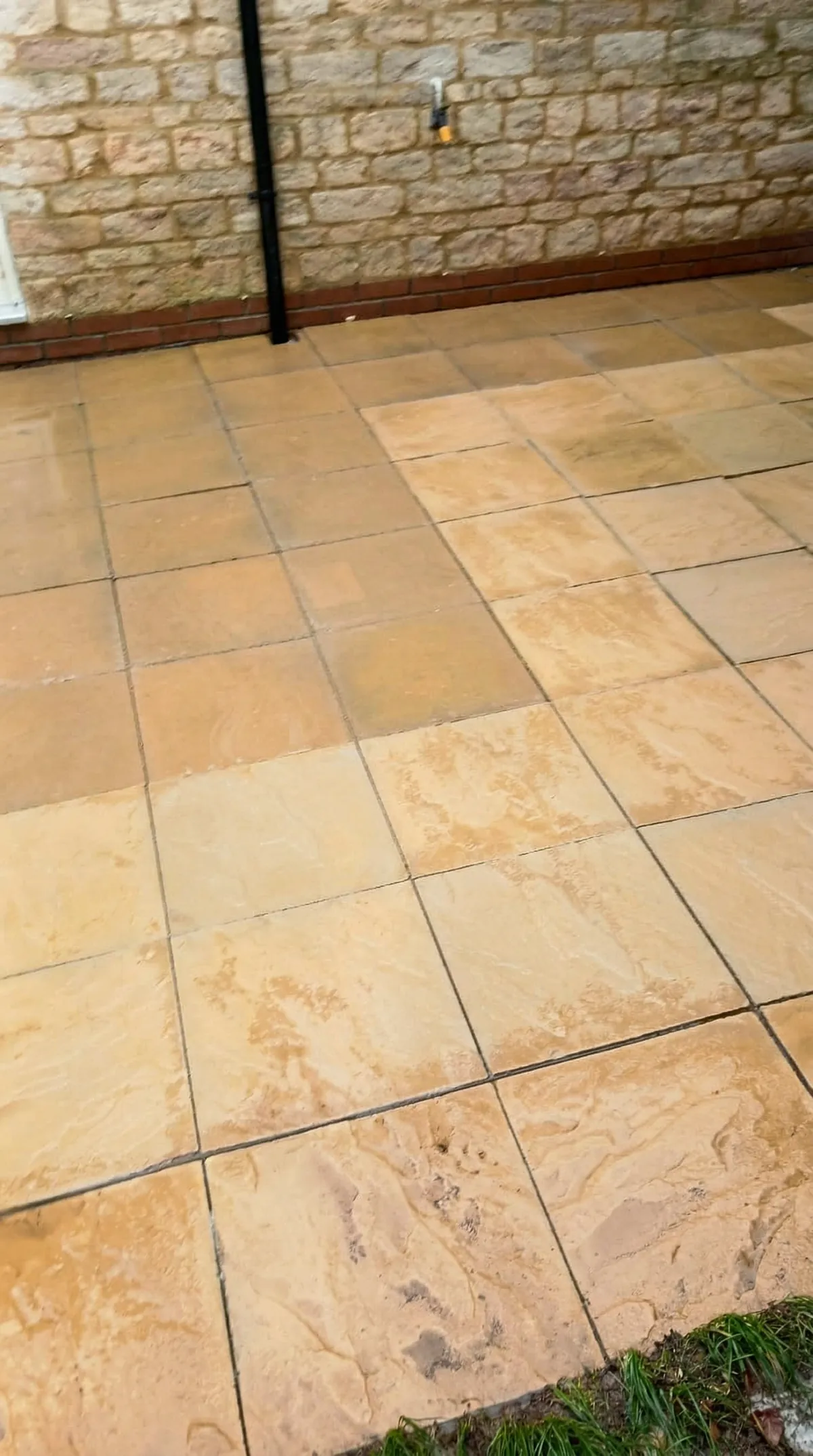
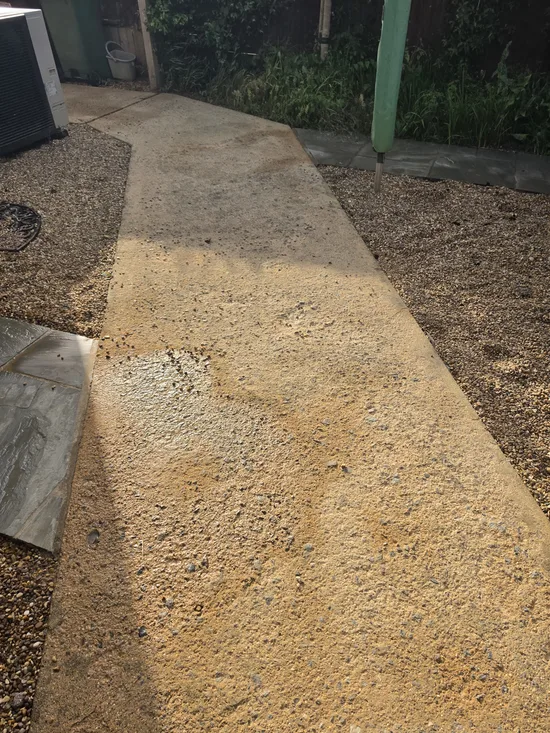
In UK gardens, green algae and biofilm are common problems on natural stone paving. So the Indian sandstone patio, heavily colonised by green algae and biofilm, didn’t take us by surprise. In fact, we understand exactly why it’s so common. Sandstone is porous, so it retains moisture. Plus, it’s at ground level without much sun exposure. Algae thrives in those conditions.
To kill the algae at the root level, we applied a sodium hypochlorite cleaning solution. Again - dwell time. Afterwards, we used a rotary surface cleaner to pressure wash the slabs. Even coverage is what everyone wants, and with rotary cleaners there are no striping marks like those a single jet leaves. They spread water across the surface at a controlled pressure. Perfect, right? Of course, we followed the cleaning with a DDAC biocide to prevent regrowth. Since they sit right in the conditions algae loves, sandstone patios gain a lot from the biocide treatment.
Need Your Exterior Cleaned?
Send us photos on WhatsApp - we can typically quote from those alone, whether it’s one surface or the full exterior. Call 07307 358765 or request a quote online.
Get a Free QuoteWhat was the main Challenge?
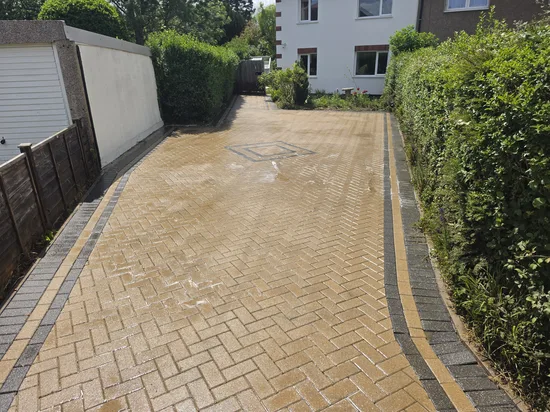
The three surfaces shared the same organic challenge - algae, lichen, and biofilm - but we had to go with a different approach each time. High pressure is a big NO on render, because it’s fragile. On modern brick mortar, we can use controlled pressure washing. As for sandstone patios, they respond best to a chemical pre-soak followed by rotary cleaners. Using the same method on all surfaces would have turned into a disaster: a high-pressure jet would push water behind the surface, aggressive pressure erodes mortar on heritage brick, and single-jet pressure washing leaves streak marks on sandstone.
We should also remind you that we aimed for uniform finishes. There’s no use cleaning a façade if it ends up looking half-cleaned. Across all three projects, we paid attention to coverage, consistent dwell times, and meticulous, thorough rinsing.
The results
- We removed all streaking from the render and restored a consistent cream/sand finish across all elevations
- The once dark-stained Victorian brick wall was back to a warm red brick colour
- After we removed the algae and biofilm, the sandstone patio returned to its original warm buff tone
- For regrowth protection, we applied DDAC biocide on all three surface types
- We didn’t damage any mortar, render, or stone surfaces
Related Services
- Render Cleaning - method detail, render types, pricing from £350
- Pressure Washing - patios, driveways, block paving, from £150
- Exterior Cleaning in Northampton - all residential services
Project Images

Get Your Free Quote
Fill in the form below and we'll get back to you within 24 hours.